Eleven Days from Basket to Branch: The Real Life of a Personalised Bauble
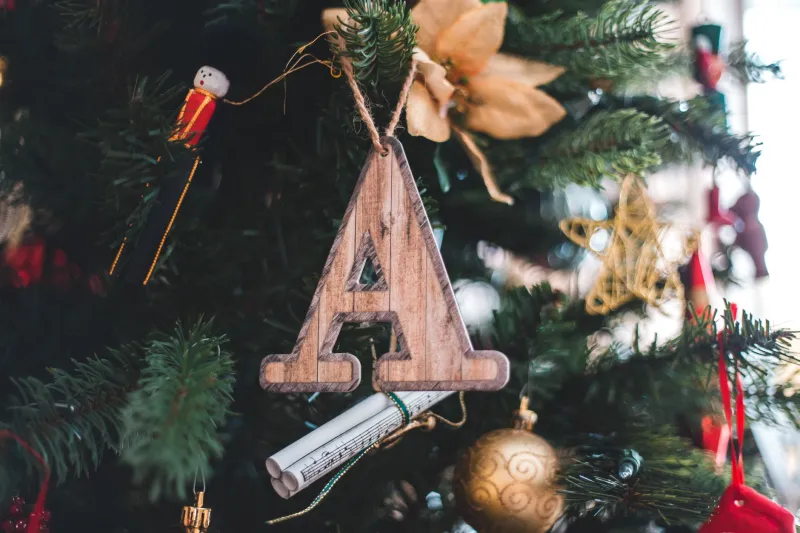
There is a moment, usually around the second week of December, when a shopper looks at an order confirmation and thinks: it's just a bauble with a name on it. Why does it take eleven days?
It is a fair question. It is also the question that prompted this piece. To answer it properly, we asked three UK makers who sell personalised wooden and ceramic decorations to walk us through a single order, start to finish. What follows is a composite timeline — one bauble, one name, one very ordinary Tuesday in late November 2026 — with the dull bits, the sticky bits and the 11pm panic left in.
Day One: The Basket and the Breath
Our order lands at 9.42pm on a Tuesday. A round oak bauble, 7cm across, engraved with the name 'Imogen' and a small star. £18 plus postage. The buyer adds a note: No rush, it's for our tree, not a gift.
The maker reads that note the next morning and quietly files it under 'famous last words'. Not because the buyer is being unreasonable — they aren't — but because 'no rush' orders have a habit of becoming urgent the moment a relative sees the bauble and wants one too. By day three, there are often four names in the queue where there was one.
The confirmation email goes out automatically. What does not is the bit where the maker checks the workshop diary, sees two school runs, a craft fair on Saturday and a drying rack that is already full, and works out whether 'Imogen' fits before the weekend. That calculation is invisible to the shopper. It is also the reason some orders arrive in five days and others take twelve.
Days Two to Four: The Proof That Stops Everything
Before anything sharp goes near the wood, there is a proof. A digital mock-up, usually a photo of the actual blank with the name laid over it in the chosen font. The maker sends it and then waits.
This is the most underrated part of the whole process. A proof is not a formality. It is the point where 'Imogen' can become 'Imogen with a curly I', where a hyphen appears in a surname that was typed without one, where a buyer realises the font they picked looks lovely on a screen and slightly frantic on a 7cm disc.
Good makers chase the proof. They do not simply send it and hope. They send a reminder after 24 hours, because an unapproved proof on day four is an order that ships on day nine. In our composite timeline, the buyer replies on day three with one word: Perfect. The maker exhales and moves the job to the cutting list.
Days Five and Six: Where the Name Meets the Wood
Engraving day. The blank is clamped into a jig, the laser is focused, and the first pass takes roughly four minutes. The maker watches it the way you watch a kettle you don't trust.
This is where the awkward bits live. Wood is not uniform. A knot in the wrong place can throw the lettering off-centre. A ceramic bauble can chip if the glaze is uneven. Makers keep a 'test pile' for exactly this reason — offcuts and seconds they use to check depth and speed before committing to a customer's piece.
Our bauble behaves. It comes off the bed with crisp edges and a faint smell of scorched oak that will fade by the weekend. The maker photographs it, because shoppers like progress pictures, and then puts it on the drying shelf. Not because the engraving is wet — it isn't — but because the oil finish goes on next and that needs time.
Day Seven: The Drying Shelf
Nobody posts about the drying shelf. It is the least photogenic part of handmade gifting and the one most likely to blow a deadline.
A coat of food-safe oil or a thin lacquer takes 24 hours to cure properly in a warm workshop and considerably longer in a cold one. A maker in an unheated garage in January will tell you that 'cured' is a flexible word. Rush it, and the bauble arrives smelling of solvent and sticking to the tissue paper. Wait, and the order slips a day.
This is the point where the price of a handmade bauble starts to make sense. You are not paying £18 for a disc of wood. You are paying for someone to leave it alone for a day when they would rather be packing it.
Days Eight and Nine: The 11pm Re-Do
Here is the bit makers rarely post about. On day eight, while packing, the maker notices something. The name reads 'Imogen' but the star sits a few millimetres lower than the proof showed. It is not a disaster. Most buyers would never spot it. The maker spots it.
So the bauble goes back on the bench. A second blank is engraved, oiled and left overnight. The original goes into the seconds box, to be sold at a craft fair in 2027 with a wobbly star and an honest label. The order is now running a day late, and the maker sends a short message: Slight delay, re-doing the star position, posting tomorrow.
That message is the whole point. Personalised gifting is not a production line, and the makers who do it well are the ones who treat a near-miss as a miss. The buyer replies with a heart emoji. The maker goes to bed at 11.40pm.
Day Ten: Packing, Properly
Packing is not 'putting it in a box'. It is checking the address against the order, wrapping the bauble in acid-free tissue, adding a care card, and making sure the parcel survives a Royal Mail sorting machine that has no sentimental attachment to your Christmas.
There is also the small matter of postal rules. Ribbon, loose glitter and certain wooden shapes can affect what counts as a large letter versus a parcel. A maker who knows the difference saves you money and a week of guessing. Ours goes as a small parcel, tracked, with the name on the address label double-checked because a misspelt recipient address is the one error no amount of engraving skill can fix.
Day Eleven: The Royal Mail Handover
The parcel goes into the postbox or over the counter. The maker marks it shipped. The buyer gets a tracking number and, if they are like most of us, checks it four times before lunch.
In late November, this is the day that matters most. Royal Mail's last posting dates for Christmas 2026 are not a suggestion, and a personalised order placed on 18 December is a gamble, not a plan. Makers build their cut-offs backwards from those dates: eleven days for a bauble, fourteen for a larger engraved gift, longer if the workshop is busy.
Knowing the timeline changes how you shop. Order in the first week of December and you are buying calm. Order on the 20th and you are buying hope.
What You Are Actually Paying For
Not just materials. You are paying for the proofing conversation, the test cuts, the drying shelf, the re-do, the packing tape and the person who notices a star is two millimetres off. Eleven days is not a delay. It is the process, working as it should.
If a maker cannot tell you roughly how long their timeline is, that is worth noticing. If they can — and if they mention the awkward bits — that is usually a good sign that your bauble will arrive on time, with the right name on it, and no smell of solvent.