Handmade or Just Hand-Wrapped? A 2026 Reality Check on UK Craft Labels
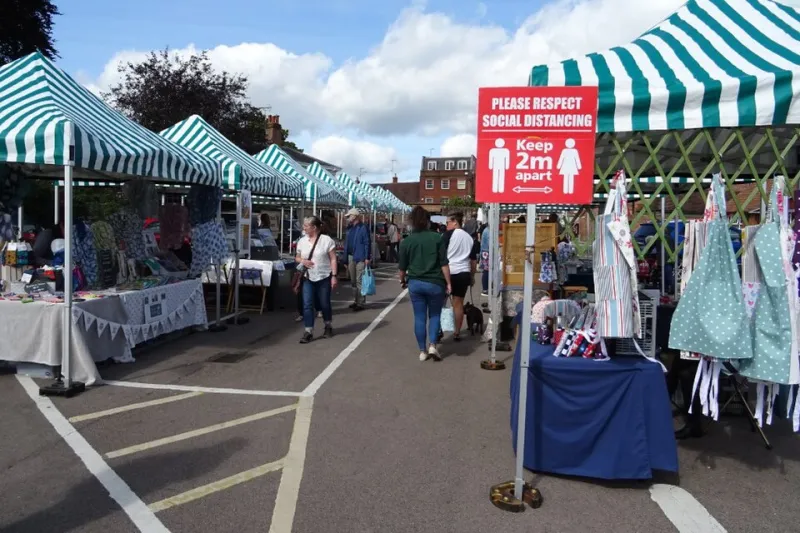
Photo: Philip Halling , CC BY-SA 2.0, via Wikimedia Commons
Handmade is one of the most reassuring words on a gift listing. It suggests a person, a pair of hands, a kitchen table, maybe a dog underneath it. In 2026, though, the label is doing a lot of heavy lifting. It can mean a maker cut, stitched, sanded and engraved every part. It can also mean someone bought a blank in bulk, printed a name on it and wrapped it in tissue paper. Neither is illegal. But only one is what most shoppers think they are buying.
Think of this as the health warning on the label: not a ban, just a reminder to read the small print. Here at Creations by Alice, we love a genuine maker-made gift. We also know that 'handmade' has no single legal definition in the UK, which means it is down to buyers to look a little closer.
Why 'handmade' is having an identity crisis
The word has become a mood as much as a method. On marketplaces, social ads and craft-fair stalls, 'handmade' may describe something made from scratch by the seller, or something assembled, decorated, personalised or finished by them. A mug bought plain and printed with a name is arguably hand-finished. A necklace bought from a wholesaler and dropped into a gift box is not handmade in the way most of us picture.
That does not make every reseller a villain. Some small shops are honest retailers of other people's work, and some makers use bought-in blanks because it keeps costs sensible. The problem is fuzzy language. When a listing leans on words like 'artisan', 'bespoke' and 'made with love' but never says who actually made the item, the shopper is left to guess.
Red flags on a product listing
No single clue proves anything on its own. A slick listing can belong to a brilliant maker, and a wonky photo can belong to a beginner. But a cluster of these is worth a pause:
- The same product photos appear across several different shops with different names.
- A huge catalogue of complex personalised items, all dispatched within 24 hours.
- Vague materials, such as 'premium wood' or 'quality metal', with no species, fibre or hallmark details.
- No process shots, no workshop photos and no maker name anywhere.
- Wording like 'designed in the UK' rather than 'made in the UK'.
- Reviews that mention slow overseas delivery, strong chemical smells or items arriving in identical wholesale packaging.
- A dropdown menu that offers 40 name styles but no way to ask for anything slightly different.
None of this means you should cancel the order. It means you should ask one direct question before you do.
The questions worth asking before you buy
A real maker will not mind a polite query. They may take a day to reply because they are, quite literally, at the workbench. Try these:
- Who physically makes this item, and where is your workspace?
- Which parts do you make yourself, and which parts are bought in?
- How long does my personalised version take from start to finish?
- What material is the base item, and how is the personalisation applied?
- Can you show me a photo of a similar commission you have finished?
- How should I care for it, and can it be repaired later?
- For jewellery, is it hallmarked where required, and what are the stones and metals?
- For textiles, what is the fibre content, and will the name be embroidered, printed or applied as vinyl?
If the answers are clear, specific and slightly boring in the best way, that is a good sign. If every reply is a copy-and-paste paragraph about 'our skilled artisans', you have learned something too.
How to read a craft-fair stall
Craft fairs are wonderfully human, but they are not automatically maker fairs. A stallholder selling resold stock is not necessarily dishonest; they may be a retailer who is clear about it. The issue is when the story is fuzzy.
Look for work in progress, offcuts, sketchbooks, sample books and tools that look used rather than staged. A maker can usually tell you where the fabric came from, why a glaze behaved oddly or which engraving bit gives the cleanest line. A reseller may be friendly and helpful but unable to answer basic material questions without checking the packaging.
Do not judge by the tablecloth. A beautifully styled stall can belong to a bulk buyer; a slightly chaotic one can belong to a superb maker who has been up since six. Ask, listen, and trust the details.
Signs a personalised gift is genuinely made by the seller
Truly maker-made personalised gifts tend to have small tells. The name placement may vary slightly because it is set by eye and hand. The maker may offer a sensible wait time. They may have a maker's mark, a Care card or a repair policy. They may be able to tweak a design beyond the dropdown menu, or explain why a certain font will not work on a curved surface.
A slightly imperfect finish is not proof of authenticity, and a flawless one is not proof of a factory. But a maker who can talk you through the process, the materials and the limits of what is possible is usually the real thing.
One practical note for UK shoppers: personalised items made to your specification can lose the usual 14-day cancellation right under consumer rules. That makes the pre-order conversation even more important. Ask about lead times, spelling and changes before you pay, not after.
A fairer label for 2026
We would love to see more listings use plainer language: 'made by me in Sheffield', 'hand-finished in our Bristol studio', 'designed here, made by our small team in Portugal'. That is more useful than a vague badge. It lets shoppers choose with their eyes open, whether they want a £12 printed bauble or a £120 hand-engraved keepsake.
Handmade is not a guarantee of quality, and factory-made is not automatically bad. But if the story is the reason you are paying more, you deserve to know whose hands are in it. Ask the question. The good makers will thank you for it.