Cupboard Corners and Kitchen Tables: Inside the Tiny UK Studios Behind Personalised Gifts
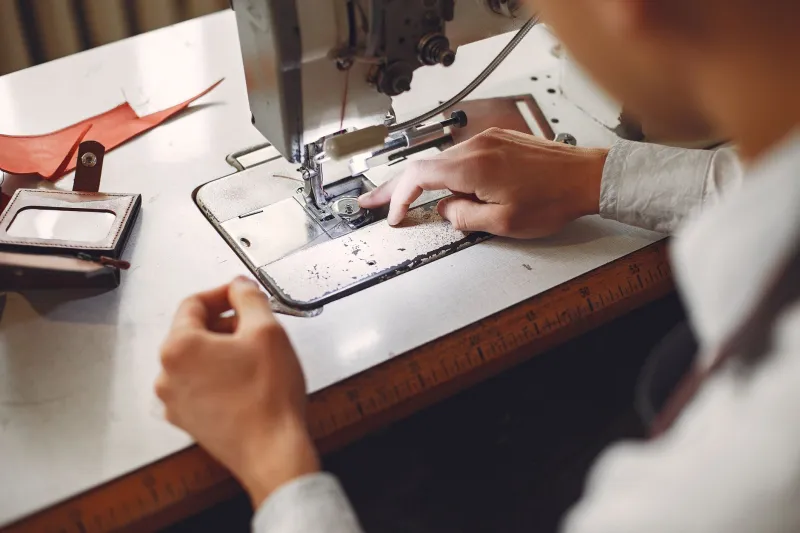
There is a romantic idea that handmade means a wood-panelled studio, a wall of neatly labelled drawers and perhaps a radio burbling in the corner. Sometimes that is true. Often, though, the reality is a kitchen table cleared at 9pm, a sewing machine tucked beside a boiler, or a shed where the lawnmower has been politely asked to move aside.
For UK makers producing personalised gifts, space is not just a practical detail. It shapes what they can make, how many they can make, how long it takes and what the finished piece looks like. If you are ordering a personalised present this winter, knowing a little about the one-metre workshop can help you ask better questions — and appreciate the result more.
Where the workshop actually lives
Mara works from a spare-room corner in Bristol. Her setup is a desk, a small cutting mat, a heat press and a stack of boxes that doubles as a drying rack. She makes personalised baby blankets and embroidered name signs. The desk is about a metre wide. When the ironing board is up, the room is full.
Ewan, near Glasgow, works from a shed at the bottom of the garden. It has power, a small heater and just enough room to turn around. He engraves wooden Christmas decorations and personalised keyrings. In winter, he works in a coat. In summer, he works with the door open and midges for company.
Sian, in Carmarthenshire, uses the end of a kitchen worktop for jewellery stamping. Her tools live in a biscuit tin. Her hammering happens on a folded towel to keep the noise down and the worktop intact. She has a strict rule: nothing that cannot be packed away before dinner.
These are not unusual stories. They are the norm for many small UK craft businesses. The personalisation boom has not changed that. If anything, it has made small, flexible setups more viable: a maker can offer names, dates and short runs without needing a factory.
What a tiny space does to lead times
A one-metre workshop is not a marketing gimmick. It has real consequences. When your drying space is a windowsill, you cannot rush a varnish. When your heat press sits next to the kettle, you cannot stack up thirty orders and hope for the best. Many makers work in batches of five or ten, then stop to let things cure, cool or dry.
That is why a personalised piece can take a week or two even when the maker seems to be working from home. It is not because they are slow. It is because the process is genuinely small-scale. There is no conveyor belt. There is a person, a tool and a limited patch of surface.
This also explains why many makers set cut-off dates earlier than shoppers expect. A tiny studio cannot absorb a last-minute surge. If you are ordering a personalised gift for Christmas 2026, ask when the maker expects to dispatch, not just when you hope it will arrive. A clear date is kinder than a vague promise.
Limited runs are not a sales tactic
When a maker says they can only take a certain number of orders, it is often about physical capacity rather than exclusivity. If you can only lay out six engraved boards at once, six is your batch. If your cupboard fits four rolls of ribbon, four is your material limit. If your spare room cannot hold more than a dozen boxes, a dozen is a sensible weekly cap.
That limit can be a good sign. It usually means the maker knows their process and is not overpromising. It also means the piece you receive has not been rushed through a space that cannot handle it.
Materials chosen for small spaces
Small workshops tend to favour materials that behave predictably. Wood that engraves cleanly. Acrylic that cuts without too much dust. Cotton and linen that press well. Metals that can be stamped by hand without a full studio of equipment. This is not a compromise. It is a practical choice that often leads to better results.
It can also mean fewer options. A maker in a cupboard corner may not offer twenty colours or five sizes. They may offer three. That is usually because those three work well in their space and with their tools, not because they are being difficult.
The imperfections worth treasuring
Handmade personalised gifts are not meant to look like they came off a production line. In a tiny studio, you may notice a slight variation in letter spacing, a faint mark from a hand-stamped edge or a tiny difference in the grain of two otherwise matching pieces. These are not faults. They are the fingerprints of a process that is done by a person in a real room.
That said, genuine faults should be fixed. A misspelt name, a broken clasp or a decoration that falls apart is not charm. The difference is usually obvious: small variations in finish are part of the piece; poor workmanship is not.
Questions worth asking before you order
If you are buying a personalised gift from a small UK maker this winter, a few friendly questions can save a lot of uncertainty. Ask where the piece is made and what the current lead time is. Ask whether the maker works in batches and when your order would be started. Ask what materials are used and whether the personalisation is engraved, printed, embroidered or stamped. Ask how the piece should be cleaned. And ask what happens if something arrives damaged.
None of these questions are nosy. They are the sort of thing a good maker is happy to answer. They also help you understand that the one-metre workshop is not a limitation to overlook. It is part of the story of the gift — a small space, a careful pair of hands and a piece made to order rather than pulled from a shelf.