Hooks, Putty and Leaning Shelves: Personalised Home Gifts for Rented Flats

Photo: lightweight framed personalised print leaning on wooden shelf in bright rented flat, no wall fixings, via d1eipm3vz40hy0.cloudfront.net
There is a particular kind of pause that happens when a personalised print arrives and you remember, somewhere between the tissue paper and the bubble wrap, that your tenancy agreement has an entire paragraph about what you may and may not do to the walls.
It's a real tension. Personalised home gifts are, by design, about belonging — your name, your date, your family, your kitchen. Renting can feel like the opposite: magnolia everything, and a deposit sitting in a protection scheme like a hostage. So how do you give someone a piece of home without handing them a repair job?
We asked a handful of UK makers who sell into rented households what actually works, and what quietly comes back to bite people at checkout time.
What Fair Wear and Tear Really Covers
First, a bit of calm. Deposits aren't returned on the basis of a place looking lived-in. Under the usual UK rules, landlords can only deduct for damage or for things that go beyond fair wear and tear — and normal life, including a certain amount of scuffing and fading, is expected. The trouble starts when a fixing pulls a fist-sized patch of emulsion off a wall, or leaves a residue that needs a decorator rather than a damp cloth.
So the question isn't whether a gift touches the wall. It's what happens on the day it comes down.
The Wall Without a Hole
Makers who supply renters tend to design around three approaches, and it's worth knowing which one you're buying.
Freestanding pieces. Oak photo blocks, ceramic name tiles on a little wooden stand, engraved acrylic plaques that sit on a shelf or windowsill. Nothing is fixed to anything. These are the safest bets for anyone who moves every twelve months, and they photograph beautifully for the maker's own shop page too, which is probably why the category keeps growing.
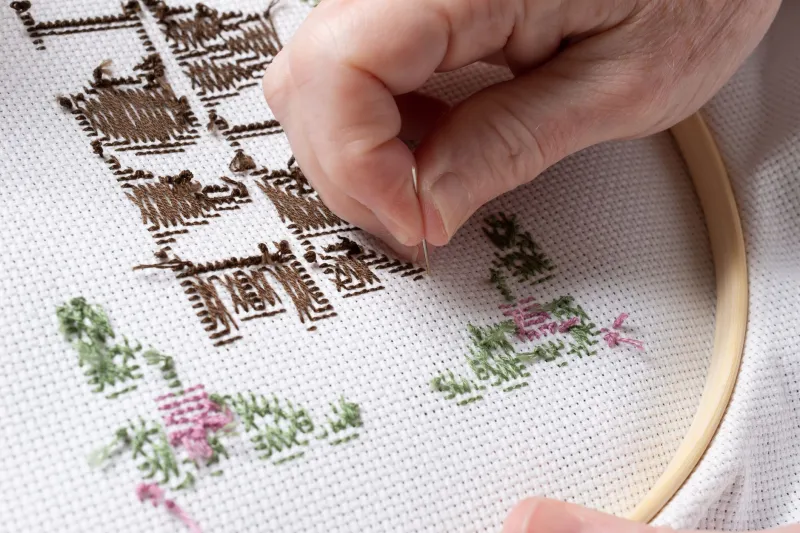
Fabric-led makes. Bunting, wall hangings on a dowel, quilted name banners, embroidered hoops finished with a ribbon loop. Fabric is light. Light things need very little to hold them up, which means a single existing picture hook, an over-door hanger or a tension rod across a window recess will often do the job. One textiles maker told us her rule of thumb: if the piece weighs more than a paperback, it isn't a renter's piece.
Framed prints with a plan B. A personalised print is the most-gifted item in this whole category, and also the one most likely to end in a patched wall. The sensible version is a lightweight frame that can lean on a picture shelf, a mantelpiece, a windowsill or the top of a bookcase. If it must go on the wall, keep the frame light, use removable adhesive strips rated well above the item's weight, and read the bit of the packet about painted surfaces.
Ask Before You Add to Basket
Gift-givers tend to ask makers about fonts and delivery dates. Renters need to ask about hanging. A short, friendly message covers it:
- How is this designed to be displayed — hanging, leaning or standing?
- What fixings come with it, and what do they attach to?
- Roughly how heavy is it once packed?
- Is the fabric washable, and will it fade near a radiator or a bright window?
- If it's a name plaque for a door, does it fit an over-door hook rather than a screw?
Most small makers answer these in a day, and several have already put the answers in their listings because they got tired of asking. If a shop can't tell you how a piece hangs, that's useful information too.
The Removal Test
Here's the bit nobody thinks about in November and everybody thinks about in July.
Removable adhesive strips are genuinely good, but they are not magic. They behave well on smooth, well-painted, sealed surfaces. They behave badly on fresh emulsion that hasn't fully cured, on textured or lining-paper walls, on gloss that's already slightly flaky, and in steamy bathrooms where the adhesive softens. A strip that fails at 3am takes a chunk of paint with it on the way down.
A few habits worth passing on with the gift:
- Test a strip somewhere hidden first — behind a door, inside a cupboard — and leave it a week.
- Clean and dry the wall properly before sticking anything. Dust is the enemy.
- Pull the tab slowly, flat against the wall, not outwards. This is the entire trick.
- Keep the spare strips and the packaging. If you move out in a hurry, you'll want to rehang the piece in the new place rather than bin it.
- Avoid adhesive putty on wallpaper. It lifts the pattern. Use it for levelling a leaning frame on a shelf instead.
And if a wall does lose a patch of paint? A small tub of tester paint in the right shade, matched before you move in rather than after, has saved more deposits than any amount of good intentions.
Styling a Space You Don't Own
Rented homes respond well to a bit of gentle layering. Because you can't repaint or re-tile, the personality has to arrive as objects: a personalised chopping board propped against the splashback, an embroidered name hoop hung on the end of a curtain pole, a set of engraved coasters on a tray that hides a tired bit of worktop, a door plaque on an over-door hook that comes off in one movement.
Group things rather than scattering them. Three leaning frames of different heights on one shelf read as deliberate; one frame alone on a big blank wall reads as temporary. And keep the strongest personalised piece low, at eye level when you're sitting down, so it's the thing guests notice rather than the magnolia above it.
A Last Word on the Deposit
A deposit isn't a verdict on your taste. It's a record of condition, and it should already exist in the check-in inventory. Photograph the walls before you hang anything — genuinely, with your phone, dated — and photograph them again when the piece comes down. If a letting agent queries a mark, that pair of photos is worth more than any argument.
Buy well, hang lightly, and take the good stuff with you. That's the whole approach — and it's the reason a well-chosen personalised gift can survive three moves and still look like it was made for wherever you land next.