Unstitch, Polish, Patch: A Realistic Guide to Repairing Personalised Gifts in the UK
There's a specific kind of quiet that follows a personalised gift going slightly wrong. Not the drama of a broken thing — the awkwardness of a thing that's intact but incorrect. The extra 'e' in Aimee. The wedding date that got moved. The initials of someone who, as of this year, isn't around anymore.
The instinct is to bin it or hide it. But personalisation is rarely as permanent as it feels on the day you order it, and a lot of what goes wrong can be walked back — for a price, and with a caveat or two. So we asked makers across the UK what's realistically fixable, what isn't, and where the honest answer is 'start again'.
First, work out what the name is sitting on
Every repair question comes down to the substrate. Stitching in fabric is a different beast from a laser mark on oak or a graver cut into silver, and the gap between them isn't small — it's the difference between a £15 unpick and a £70 rebuild.
Before you email anyone, look at three things: what the personalisation is made of, whether the base material is solid or plated, and whether the personalised bit is a separate component (a brass plate on a wooden box, a monogram patch on a blanket) rather than cut straight into the body of the gift. If it's a separate piece, you're already in the easy tier.
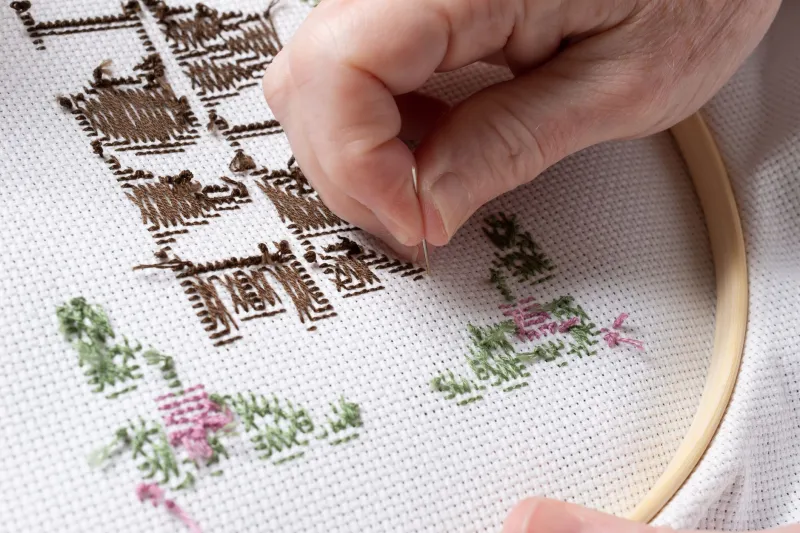
Unpicking the stitch
Embroidery is the most forgiving category, and also the most over-promised. A name in a mid-weight thread on a stable fabric — canvas, wool, a heavy cotton tote — can usually be unpicked cleanly. Expect to pay somewhere between £12 and £30 for a short name, and to wait five to ten working days at a quiet time of year.
The trouble is the holes. Every needle punch leaves a mark, and on fine linen or a lightweight shirt the fabric doesn't fully close up afterwards. Makers call it ghosting, and it's why so many of them would rather stitch over than unpick. A slightly larger design, an appliqué panel, a decorative patch or a second line of text placed to cover the旧 stitching tends to look better than a bare, punctured patch of cloth.
One embroiderer in Leeds put it plainly: on a wool blanket, she'll unpick all day. On a Christening gown, she won't touch it, and she'd rather talk a customer into a new piece than hand back something with a shadow where a name used to be.
Metal that's forgotten the name
Engraving splits into two camps, and the gap matters more than most shoppers realise.
Hand engraving cuts into the metal. Laser engraving sits on or just under the surface. A jeweller can often polish out a shallow laser mark — expect £20 to £45 depending on the piece and the depth, plus £15 to £40 to cut the new text. But every polish takes metal away, so a bangle or a locket will only take that treatment once, maybe twice, in its lifetime.
Plated metals are the trap. Engrave through gold plate on brass and you expose the base layer; the fix isn't polishing, it's re-plating, which runs £30 to £60 on top of everything else. Solid silver and solid gold are far more forgiving — and worth mentioning to anyone commissioning a piece they might want altered in five years' time.
Stainless steel is the awkward one. A laser mark on steel is close to permanent. Some workshops can grind and re-brush the finish, but a lot of jewellers will tell you straight that a fresh piece is cheaper than the rescue job. Timelines here are typically one to three weeks, longer if re-plating is involved.
Timber: patching, plugging and the Dutchman's repair
Woodworkers have the most elegant trick in the business, and it has a name. A Dutchman patch — sometimes just called plugging — means cutting out the inscribed section, gluing in a piece of matching timber with the grain running the same way, then planing it flush and refinishing. On a chopping board or a sign, that's £35 to £75 and one to three weeks.
It works best in the middle of a wide, plain board. It works badly at an edge, in end grain, or on a piece with a heavy stain you can't match. Laser etching on oak can sometimes just be sanded back — a millimetre or two usually does it — but that changes the surface, so the whole piece needs re-oiling or re-waxing to match, which is why a maker will often quote for the full refinish rather than the sanding alone.
Pyrography is the exception. Burned-in lettering goes deeper than a laser etch and often can't be sanded out at all. An inlay in a contrasting wood can turn a mistake into a design feature, but that's a £50-plus conversation, not a quick fix.
The materials where the answer is usually no
Leather can be patched — a stitched panel over a stamped name runs £20 to £50 — but the patch is visible, so it needs to look deliberate. Glazed ceramics and printed mugs are effectively one-way: the personalisation is fired on, and replacement is the realistic route. Etched glass is much the same. If a maker quotes you a repair on a glazed mug, ask exactly how, because the honest ones will say they can't.
When a remake is kinder than a repair
The rule of thumb most makers use is simple: if the repair costs more than about 60% of the original price, or the item cost under £30 in the first place, a remake is usually better value and a better object. Repairs leave evidence. A ghosted stitch line, a slightly mismatched plug, a polished-out hollow in a bangle — all of it is visible to the person who'll wear the thing.
There's also a hygiene angle that rarely gets mentioned. Deep engraving on a wooden chopping board traps moisture and food; sanding it out is fine, but patching a food-contact surface is a job for someone who knows what they're doing with food-safe glue and finishes. Ask.
November is the worst month to ask
It's worth being blunt about timing, because we're writing this on 12 November. Most UK personalisation studios are already deep into Christmas production, and rework sits behind new orders in the queue. Embroidery shops can often still turn a repair around before mid-December; engravers frequently stop taking bespoke alterations in the first week of December. If the piece is needed for the 25th, ask specifically for the maker's rework cut-off — many now publish one alongside their order deadline, and it's usually earlier than you'd like.
Questions worth asking before you commission
Most of this article becomes unnecessary if you ask four things at the point of order. Is the personalised element separate from the main body of the piece? Is the metal solid or plated? What's the policy on rework, and what would a name change cost in a year's time? And will the maker keep the artwork, font file or engraving setup on record, so a future alteration matches?
Personalised doesn't have to mean permanent. But it does mean one extra question at checkout — and a maker who's happy to answer it is usually a maker worth buying from.