No Initials Required: A Kinder Gift Guide for Personalisation-Avoiders

There is a particular kind of quiet disappointment that comes with opening a gift and realising someone has had your name engraved on it. Not because you are ungrateful. Not because the gesture is unkind. It is just that a monogrammed washbag, a slate coaster bearing your initials and a cushion announcing your exact role in the family can feel less like a present and more like a small administrative burden. Where do you put it? What do you say? And why does everyone now know that your name is Deborah, including the person who bought you the thing and the three people who will see it in the spare room?
If that sounds familiar, this guide is for you. More importantly, it is for the person you are buying for — the one who politely admires personalised presents and then quietly hides them in a cupboard. Because avoiding personalisation is not the same as avoiding thoughtfulness. It is often quite the opposite.
Why some people would rather not see their name on it
Personalised gifts are sold on the idea that they are more thoughtful than the alternative. Sometimes they are. But they are also high-risk. A name or initial is a permanent label on an object, and if the object is not quite right, the label makes it harder to pass on, return or ignore.
Clutter is one reason. A lot of people are trying to own less, not more, and a personalised item is difficult to declutter because it seems to carry an obligation. Taste mismatch is another. The recipient may love minimalist ceramics and be handed a rustic wooden sign with their surname in script. Sentimental overload can also be a factor: not everyone wants their wedding date, their child's birth details or a private joke displayed on the mantelpiece. And there is a quieter reason too — privacy. Some people simply do not like seeing their name on things, especially if they live alone, travel often or prefer not to announce themselves through their belongings.
None of this means personalised gifts are bad. It means they work best when they fit the person, not when they are used as a shortcut to thoughtfulness.
The signs to read before you order
Start by looking at what the recipient already owns. Do they carry a plain tote bag? Drink from plain mugs? Wear jewellery without initials? Have they ever mentioned disliking 'World's Best' anything? Do they live in a small flat where every object has to earn its place? If the answer is yes, a personalised item may be more about the giver than the receiver.
A useful test is to ask whether they would choose the item if it were not personalised. If the answer is no, personalisation will not rescue it. A cheap mug with a name on it is still a cheap mug. A useful apron in their favourite colour is a good gift before you add anything.
What UK makers are doing instead
In 2026, plenty of small UK makers are responding to this quietly. Instead of putting names on the front of everything, they are offering 'quiet personalisation': a hidden label inside a handmade bag, initials on the underside of a ceramic bowl, a date tucked inside a card, a removable tag rather than an engraved plaque. The gift still feels made for one person, but it does not ask that person to become a walking nameplate.
Others are leaning into choice rather than text. Pick the colour, the size, the scent, the lining, the clasp. That is personalisation too, just without the letters. It says 'I thought about you' rather than 'I had your name printed on it'.
Consumables, experiences and the charity option
Consumables are often the kindest choice for someone who dislikes clutter. A good box of tea, a bag of coffee from a local roaster, nice soap, a candle, chocolate, a spice blend or a jar of something excellent from a farmers' market all get used up. They do not need dusting. They do not need to match the sofa. Do check dietary needs and scent preferences first, though; a beautiful consumable that cannot be eaten or tolerated is still a miss.
Experiences can work well too. A workshop, a cinema voucher, a garden visit, a meal out or a craft class gives someone something to look forward to rather than something to store. Just make sure the experience suits their actual life — a spa day is not a treat if they hate being touched by strangers, and a cooking class is not relaxing if they already cook every night.
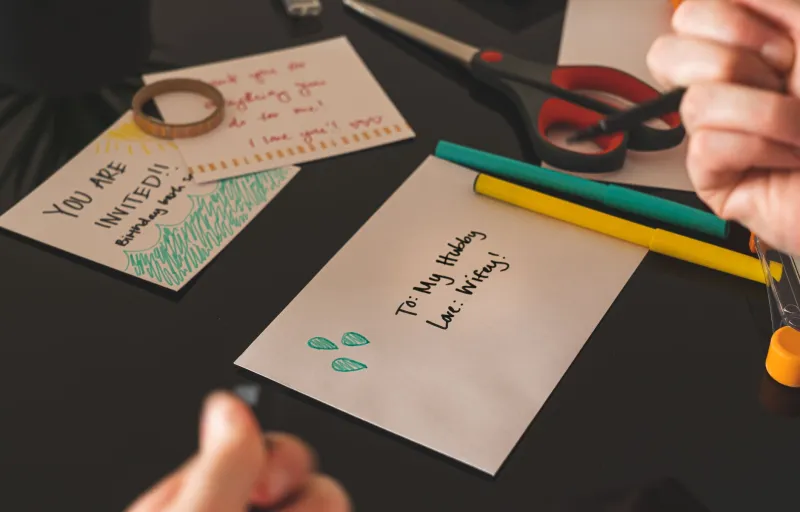
A charity donation can be the right answer when someone has asked for no gifts or already has everything they need. Choose a cause they genuinely care about, not one that makes a point. A donation to a local hospice, food bank or community garden can be lovely. A printed certificate explaining why you have done it can feel like homework. Keep the card warm and simple.
A short list of no-name gifts that still feel chosen
- A really good notebook and a pen that works.
- A plain apron in a colour they actually wear.
- A bookshop voucher with a handwritten note.
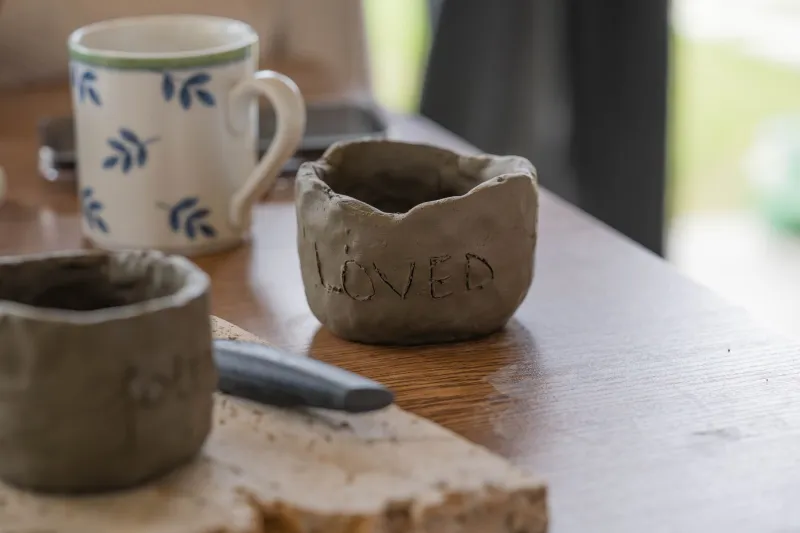
- A handmade ceramic bowl or mug with no words on it.
- A refillable water bottle in a sensible size.
- A ticket to something they have mentioned wanting to see.
- A plant, if they have the light and the patience.
- A consumable hamper built around things they already like.
The etiquette bit
If you are the giver, resist the urge to engrave unless you are certain. Makers cannot un-engrave a mistake, and recipients cannot easily un-receive a gift that has their name on it. If you are the receiver, thank the giver warmly and then do what you need to do. Regift carefully, use it in the shed, or keep it in the cupboard for a while. You are not obliged to display your own name in your own home.
Personalised gifts are not the enemy. They are simply one option among many. The best presents tend to say 'I noticed you' rather than 'I labelled you'. No initials required.