The Tiny Note in the Tissue Paper: What a Maker's Story Card Adds to a Personalised Gift
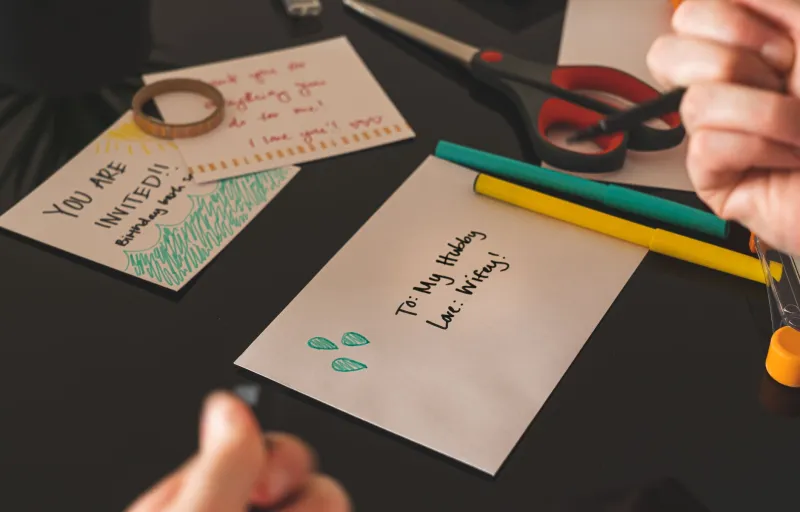
There is a particular moment when a personalised gift arrives: the parcel is opened, the tissue paper is folded back, and somewhere near the bottom is a small card. Not a printed thank-you slip. Not a care label. A proper note, often handwritten, explaining who made the piece, what it is made from and why it exists. In 2026, this tiny extra is becoming one of the quiet hallmarks of a good handmade purchase in the UK.
At Creations by Alice, we have noticed the shift in how makers talk about their work. The story card is no longer an afterthought. It is part of the gift. And for shoppers buying personalised presents, it can change the whole experience.
Why a care label no longer tells the whole story
Care labels do an important job. They tell you how to wash, wipe or store a piece so it lasts. But they are not very good at explaining why a wooden name plaque was cut from a particular offcut, or why a maker in Leeds spent three evenings getting the lettering just right on a christening keepsake.
That is where the story card comes in. It bridges the gap between the practical and the personal. A care label says 'wipe clean only'. A story card says 'made from oak reclaimed from a local joinery, finished with a food-safe oil, and best kept out of direct sunlight'.
For a personalised gift, that difference matters. The buyer has already chosen something specific: a name, a date, a message. The story card confirms that the personalisation was not just typed into a machine. It was handled by a person who knows the materials and cares about the finish.
What UK makers are actually writing on these cards
The best story cards are not grand. They are specific. A ceramicist in Stoke might explain which glaze was used and why it suits a house with hard water. A textile maker in Glasgow might note that the embroidered initials were stitched by hand and should be pressed on the reverse, not ironed directly. A small kitchen-table studio in Cornwall might admit that the finish varies slightly from piece to piece because each one is sanded by hand.
That honesty is part of the appeal. UK shoppers are a savvy lot. We have all seen labels that promise more than they deliver. A story card that names the maker, the town and the material feels more trustworthy than a vague 'handmade with love' sticker.
Many makers now include a line about the personalisation itself: the font chosen, the spelling confirmed, the date checked twice. Some add a short note about delivery or how to get in touch if something is not right. A few include a QR code linking to a longer studio story, though the handwritten card remains the star of the show.
The unboxing moment: small card, big shift
Unboxing has become a genre of its own, but most of us are not filming our post. We are just opening a parcel at the kitchen table while the kettle boils. A story card fits that moment perfectly. It slows things down for a second. It gives the recipient something to read before they get to the gift itself.
That can be especially useful when the gift is for someone else. If you are sending a personalised wedding gift, a new-baby keepsake or a Christmas bauble, the recipient may not know the maker. The card introduces them. It says: this was not grabbed from a shelf. Someone chose the materials, set up the tools and made this for you.
It also helps justify the price. A £45 handmade gift can look expensive next to a £15 high street version until you understand the time, skill and materials involved. The story card does not shout about cost. It simply explains the work. That is a far more persuasive approach.
What to look for when a gift comes with a story
If you are buying a personalised gift and want the story to be more than marketing, keep an eye out for a few practical details.
First, look for a maker name and a real place. 'Made in the UK' is fine, but 'made in my studio in Sheffield' tells you more. Second, check that care instructions are still included. A story card should complement a care label, not replace it, especially for textiles, wood and anything that will be washed or handled often.
Third, see whether the card matches the listing. If the product page says hand-painted and the card says printed, ask why. Fourth, look for contact details. A maker who is happy to be reached after the sale is usually a maker who stands behind the work.
Finally, consider the recipient. A beautifully written card is a lovely extra, but it should not be so precious that it gets lost in the recycling. Some makers now print a short story on the reverse of the care label instead, which is a neat compromise for items that will be used daily.
When a story card is not the right fit
Not every purchase needs a handwritten note. A simple personalised keyring might only need a small printed card with care advice. A large piece of furniture needs proper documentation, not just a story. And there is an environmental cost to extra paper and envelopes, which many makers are trying to reduce.
The best approach is the one that suits the gift. A story card should feel like a natural part of the parcel, not a forced extra. When it is done well, it is the thing buyers mention in reviews: 'loved the little note from the maker'. That is a strong signal.
The quiet business case for a tiny extra
For makers, the story card is not just a nice touch. It builds trust. It answers questions before they are asked. It gives customers a reason to remember the studio name. In a crowded market, that is worth a lot.
But it only works if the product is good. A card cannot rescue a wobbly engraving or a late delivery. It is the finishing touch on a gift that has already been made with care.
So next time you open a personalised parcel, look for the little card. It may be the smallest thing in the box, but it often does the heaviest lifting.