When a Name Won’t Do: Personalised Gifts Built on Dates, Places and Private Jokes
There is a certain kind of personalised gift that practically introduces itself: a washbag with two initials, a necklace with a name, a door plaque announcing the family surname. Lovely for plenty of people. But not everyone wants their identity spelled out in capital letters, and not everyone likes their name enough to see it engraved on a keepsake.
That does not mean the gift has to become generic. If anything, avoiding the name can push you towards something more interesting. It asks a better question: what actually makes this person recognisable to the people who know them best?
Why initials can fall flat
Initials are efficient, but they are also a bit of a default setting. They work when the recipient loves monograms, when the gift is for a milestone with a formal feel, or when you know their taste runs towards the classic. They stumble when the name is complicated, when the person has changed it, when they simply do not like it, or when the initials happen to spell something unfortunate.
There is also the aesthetic question. A lot of UK homes lean towards calm colours, natural materials and pieces that do not shout. A bold monogram can feel out of step with a quiet kitchen shelf or a pared-back hallway. Personalisation should sit comfortably in the room, not announce itself from the doorstep.
Many small makers are alive to this. They report more requests for dates, coordinates, handwritten notes and tiny symbols than for straight initials, especially from shoppers buying for partners, friends and parents who already own plenty of named items. The brief has shifted from “put their name on it” to “make it feel like them”.
The date that does more than sit on a calendar
A meaningful date is one of the richest alternatives to a name. It could be a wedding day, the day a couple met, the day a child joined the family, a house completion date, or the date of a favourite trip. The trick is to choose a date with a story attached, not simply a date that looks neat in a layout.
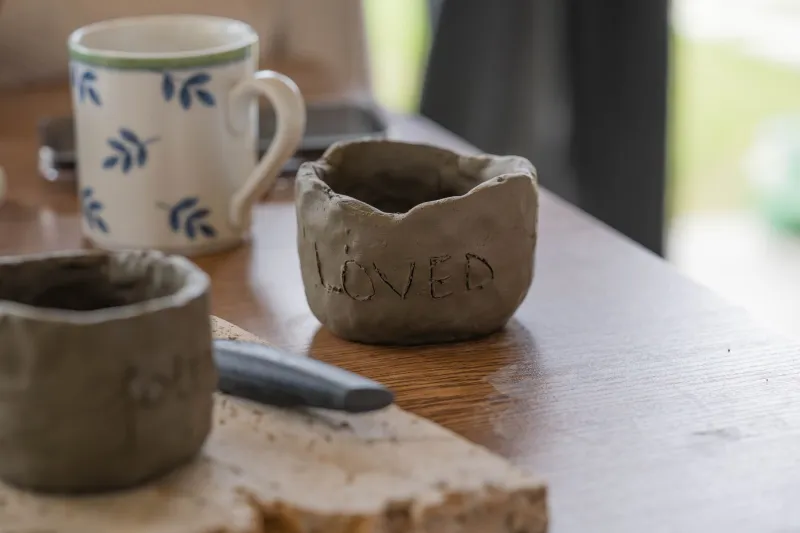
For a maker, dates are satisfying to work with because they can be understated. A small line of numerals on the base of a ceramic dish, a discreet stitch inside a linen pouch, or a date worked into a simple line drawing can carry real weight without turning the gift into a billboard.
Before you commit, check how the date will be shown. Is it day-month-year or month-day-year? Will the maker proof it? Does the font suit the piece? A date is only personal if the recipient can read it and think, immediately, of that day.
Coordinates, postcodes and places worth keeping
Map coordinates are another way in. A first flat, a favourite beach, the village where grandparents lived, a wedding venue in the countryside: these can be engraved, printed or embroidered as a tiny geographic fingerprint. They appeal to people who like the idea of a secret code, something that means everything to them and very little to anyone else.
It is worth being precise with your maker. Coordinates can be mistyped, and a postcode can date a piece to a house the recipient has since left. If the place is emotionally loaded, say so. A good studio will help you decide whether the full coordinate is right or whether a simpler place name, skyline or map contour would feel warmer.
This approach also suits people who are hard to buy for because they already have the usual things. A set of coordinates on a wooden bookmark or a small framed print does not need to match a sofa. It just needs to match a memory.
Recipes, handwriting and the kitchen table
Few things feel more personal than a family recipe in the handwriting of the person who made it. UK makers who work with textiles, ceramics and wood often take commissions based on a scanned recipe card, a favourite poem, or a few lines from a letter. The result is not just a printed object; it is a piece of family furniture for the wall or the kitchen counter.
Handwriting is a sensitive material, so choose a maker who is comfortable showing you a proof before production. Ask how much of the text will be legible at the final size. A whole recipe can work on a tea towel or a large chopping board; a few words may be better for a smaller piece. If the original handwriting is faint, a good maker will tidy it without sanding away its character.
This route works especially well for people who do not want their name on display. The recipe already carries the family name in spirit. No monogram required.
Pets, nicknames and in-jokes
A pet’s name or silhouette is a gentle way to personalise a gift without making it all about the human recipient. A dog’s profile on a keyring, a cat’s name on a ceramic treat jar, or a simple paw mark on a garden pot can be enough. It is affectionate without being overly formal, and it suits the many UK homes where the pet is, frankly, a member of the family.
Nicknames and in-jokes need more care. What is hilarious between two people can look baffling to a maker, and even more baffling to a recipient’s guests. If the joke needs a three-minute explanation, it may be better kept for a card. If it is short, warm and instantly recognisable, it can be a brilliant alternative to a name. Think of the daft phrase you say every birthday, the name of a much-loved old car, or the badly translated menu item from a holiday you still talk about.
Symbols and small marks
Sometimes the most effective personalisation is not text at all. A tiny mountain outline, a wave, a star sign, a flower from a wedding bouquet, a simple house shape or a favourite animal can say more than a name while staying visually quiet.
Symbols work well on jewellery, bookmarks, ceramics and textiles because they can be scaled up or down. They also age gracefully. A name can feel dated if a relationship changes or a child grows up; a symbol is often more flexible. Ask the maker whether they draw from scratch or use a set library of motifs. Neither is wrong, but a bespoke drawing will usually feel more considered.
What to ask before you order
Personalisation without a name still needs a proper brief. Before you buy, ask the maker how the text or symbol will be positioned, whether you will see a proof, and what happens if a detail is wrong. Check lead times, especially in the run-up to Christmas or wedding season. If the piece is engraved, ask how deep the mark will be and whether it can be refinished. If it is printed or embroidered, ask how it will wear after washing.
And be honest about the recipient’s taste. A minimalist might prefer a single date on the underside of a bowl. A maximalist might want the full recipe in swirling script. The point is not to avoid personalisation; it is to choose the kind that fits the person rather than the template.
A quick prompt list
If you are stuck, start with these questions. What date changed something for them? Where do they always return to? What do they cook, grow or collect? What is their pet called? What silly phrase do you both use? What shape or symbol have they always loved? Which small detail would make them smile before they have even read the card?
A gift does not need initials to be unmistakably theirs. In 2026, with so many makers offering thoughtful alternatives, the better brief is simple: personal, not predictable. That is the sort of present that stays on the shelf long after the wrapping paper has gone.