Kitchen Table Studio: Five Personalised Makes for Small Flats
There is a particular kind of craft optimism that arrives when you see a beautiful personalised gift and think: I could make that. Then you look around your rented kitchen. One stretch of counter. A kettle. A drying rack that is already full. A cat with strong opinions. No workshop, no spare room, no utility corner.
That does not mean you have to close the tab on handmade gifts. It means choosing projects that respect the space. The five below are kitchen-table friendly, use materials you can buy on a normal Saturday, and do not require drilling, spraying, soldering or a kiln. They also come with the boring-but-useful bits: realistic time, rough cost and the things that can go wrong.
The rented-kitchen rules
Before any making starts, protect the deposit and your sanity. Cover the table with a washable cloth or a cheap shower curtain. Keep pets out of the room while things dry, especially anything clay-based or bead-sized. Check that your extractor works if you are using an oven, and never leave a baking project unattended. Steam from a boiling kettle is not a drying aid; it is just steam. And if a project needs strong fumes, a spray booth or a permanent workbench, it is not a kitchen-table project.
1. Air-dry clay initial dish
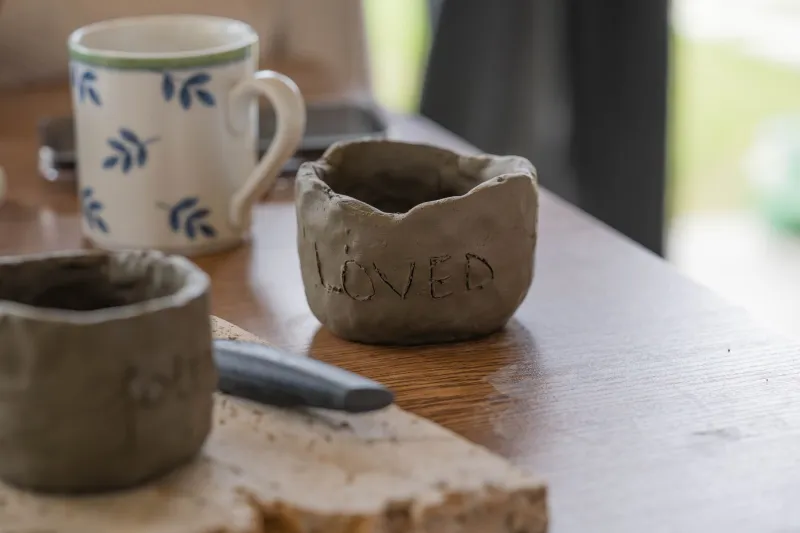
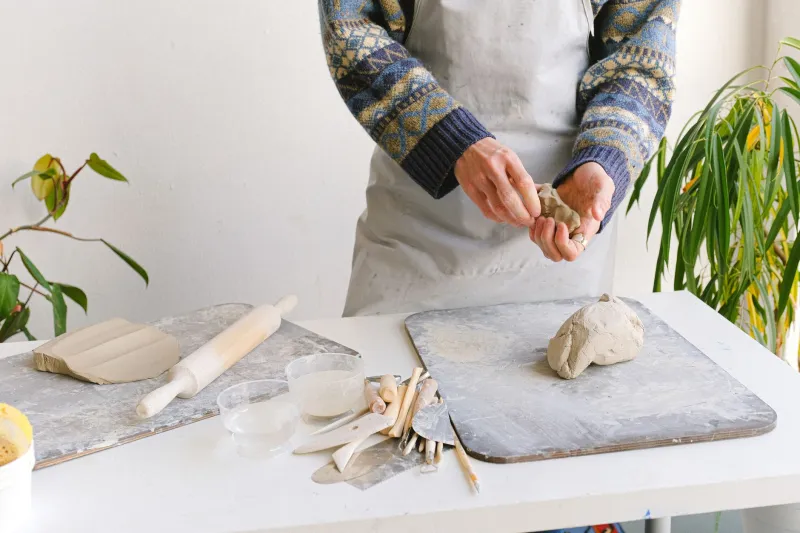
This is the reassuring one. Air-dry clay is forgiving, cheap and does not need an oven. Roll it out on greaseproof paper, cut a small dish shape with a cookie cutter or a bowl, then press in initials or a date with letter stamps. Leave it flat to dry, turning it once a day so the base does not sweat against the paper.
Time: about an hour to make, 24 to 48 hours to dry, then 30 minutes to paint and seal. Cost: £10 to £15 if you are starting from scratch, less if you already have acrylic paint. Skill: easy. If you can roll pastry, you can do this. Watch out for: thick edges. They crack. Keep the dish fairly thin and even. Also decide up front that it is a trinket dish, not a food dish, unless you have a genuinely food-safe glaze and know how to use it. A personalised ring dish or key bowl is a lovely gift; a wobbly gravy boat is not.
2. Oven-bake clay keyrings
Polymer clay keyrings are small, light and very giftable. You can make a name tag, a tiny house number, a pet silhouette or a simple shape with a hole for the split ring. The catch is the oven. In a rented kitchen, use a dedicated baking tray lined with baking parchment, ventilate the room and follow the clay packet temperature exactly. An oven thermometer is worth the few pounds because oven dials are often wildly optimistic.
Time: one to two hours of making, plus 30 minutes baking and cooling. Cost: £12 to £18 for clay, rings and a small set of alphabet stamps. Skill: easy to medium, mostly because of the oven timing. Watch out for: scorching pale clay, smells that linger, and using the same tray for food afterwards. Keep clay tools and trays separate. Do not bake while you are also cooking chips; the multi-tasking is not worth it.
3. Fabric-pen recipe tea towel
A plain tea towel, a favourite family recipe and a set of fabric pens make a genuinely personal gift without any drying drama. Write the recipe in pencil first, go over it with fabric pens, then set it with an iron according to the pen instructions. Add a name, a date or a tiny drawing of the dish. It is the sort of present that gets used rather than stored.
Time: one to two hours, plus 24 hours before ironing. Cost: £10 to £15 for a tea towel and pens if you buy sensibly. Skill: easy, but handwriting confidence helps. Watch out for: bleeding on thin fabric. Test on the hem first. Iron without steam if the instructions say so. And keep the cat off the towel while it sets; pet hair is not a decorative flourish.
4. Decoupage photo coasters
Wooden coasters, a brush, PVA glue and printed photos or maps make a personalised set that looks far more considered than the effort involved. Print on plain paper rather than glossy photo paper so the glue can grip. Brush glue on the coaster, press the image down, smooth out bubbles with a clean finger or a teaspoon, then seal over the top. Dry between layers.
Time: about an hour of active work, but allow overnight drying between coats and 24 hours before stacking. Cost: £8 to £12 for four coasters, plus printing. Skill: easy, but patience is the real material. Watch out for: bubbles, smudged ink and sticking coasters. Do not rush the sealing coats. If you are using a map of a first flat or a favourite beach, check the print is not too dark; pale maps work better under glue.
5. Letter-bead bookmark or bracelet
This is the lowest-risk make on the list. Elastic cord, letter beads, a few charms and a knot. You can personalise a bookmark with a name, a private joke or a short message, or make a simple bracelet in someone's favourite colours. It takes up no drying space, needs no oven and can be finished before the kettle boils.
Time: 20 to 40 minutes. Cost: £5 to £10 for enough materials to make several. Skill: very easy. Watch out for: small beads around pets and young children, and knots that come undone. Pull the knot tight, trim the ends and test it before gifting. Skip superglue in a small kitchen; it is fiddly, smelly and usually ends up on your fingers.
What to leave for another day
Resin, spray paint, soldering, large woodwork and anything that needs a permanent extraction setup are not kitchen-table crafts in a rented flat. They are not impossible, but they are not this. The point of a small-space project is that you can clear it away before dinner and still get your deposit back.
If you are buying a kit, check what it actually includes. A kit that assumes a glue gun, a dedicated oven tray or a dust-free drying cupboard is not really beginner-friendly in a small flat. Start with one project, buy only the materials for that project, and see how it fits your space. The best handmade gift is not the one that takes over the kitchen for a fortnight. It is the one you finish, wrap and feel quietly pleased about.