Please Don't Engrave That: Seven Personalised Gift Mistakes UK Shoppers Pine For Less
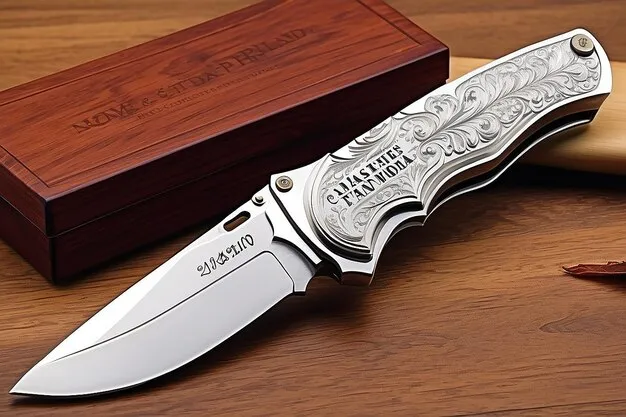
Photo: engraved personalised gift wooden keepsake name detail close up, via img.freepik.com
I have a friend who owns a tote bag with her daughter's name on it in a font that reads, unmistakably, like a prescription. She paid £34 for it. It sits in a cupboard. She cannot throw it away because it is personalised, and she cannot use it because it makes her daughter look like a repeat prescription for antibiotics.
Personalisation is sold to us as the ultimate thoughtful gesture, and very often it is. But it is also the one corner of gift-buying where you cannot quietly exchange the item in January and hope nobody notices. A mistake is permanent, and it is public. So, from the accumulated wisdom of makers, gift shop owners and a few rueful shoppers, here is the honest list.
1. Names on clothing they will outgrow by spring
Babies are the most over-personalised group in Britain. Let us look at the maths: the embroidered cardigan with 'Florence' stitched beautifully across the yolk is lovely for about eleven weeks. By spring it is a relic. By next winter, it is a relic that no second child, charity shop or sibling swap can absorb, because Florence has moved on and so has the world.
Names on coats, hats and wash bags can survive. Names on the back of newborn vests are sentimental rather than sensible.
2. The date that does what dates do
Wedding date glasses, engagement champagne flutes, 'Est. 2026' signage — all of these look charming until a separate event occurs and the item is quietly rehomed. Worse is the date that was almost wrong: a birthday one year out, a couple's anniversary guessed from a vague memory of the summer.
If you are not certain of the date, choose a year, an initial, or nothing at all. A gift with no date is a gift forever. A gift with the wrong date is a story that gets told about you at Christmas dinner for the next decade.
3. Novelty items that age like milk
A mug printed with 'World's Best Daddy' is sweet in year one. By year nine, it is doing a lot of work and you would rather it wasn't. The same goes for jokey engraved hip flasks, novelty pint glasses and anything with a karaoke lyric on it.
The test is simple: could this live in a kitchen without needing to explain itself in ten years' time? If not, buy something plainer and write a card.
4. The impossible-to-clean problem
This is the quiet regret nobody mentions at the time. A wooden board engraved with a full recipe looks stunning and will collect flour in every letter. Engraved slate is permanently matte. A printed mug is fine until the dishwasher, and the seller did say hand wash only, and you read it and filed it under 'probably fine'.
Before you commit, ask the maker the boring questions: can it go in the dishwasher, does it need oiling, is the personalisation on top of a glaze or under it, will the lettering gather crumbs. Makers who work with these materials will usually answer honestly, because they have had the returns conversation before.
5. Names that will be changed, shortened or abandoned
Full names on a child's pencil case are a risk. So are names chosen in the rosy glow of a nine-month scan that get replaced upon arrival — it happens constantly and nobody warns the embroiderer. If you are buying for someone else's newborn, a nickname or an initial will keep you out of trouble rather than committing to a spelling that later turns out to be with two Ls, not one.
And a note on spelling: double-check it aloud, then check it again against a message, not from memory. The most common personalisation regret in the whole of Britain is not a bad design. It is a missing letter, or an extra one, that nobody noticed until the wrapping paper came off.
6. Buying the wrong size, permanently
Monogrammed slippers and initialled dressing gowns have a particular cruelty. If the size is wrong, the gift is unusable and unfixable in one move. With embroidery and engraving, sizes matter more, not less, because you cannot slip into a shop in the sales and swap it out.
If you do not know the size for certain, personalise something that does not fit the body: a bookplate, a keyring, a little wooden star, a photo frame.
7. Personalisation that is actually about you
This one is subtle, so treat it kindly. Sometimes we personalise a gift with our own taste, our own inside joke, our own favourite colour, because it feels like a marker of closeness. The recipient then owns an object that mainly commemorates you.
That sounds harsh, and it is not meant to. But if the joke is yours, put it in a card. Let the object be theirs.
The five-line checklist before you hit confirm
- Is the spelling right, and can you prove it? Read it off a message or a document, not from memory.
- Would I want this in ten years? If the answer is a shrug, choose something simpler.
- Can it be cleaned the way it will actually be cleaned? Dishwasher, washing machine, sink.
- Does the size matter, and do I know it? If not, buy something size-free.
- Is the name or date definitely permanent? Ask yourself if it might change within a year.
A quiet word for makers
If you sell personalised work, you probably recognise half these scenarios. Which brings up something worth saying plainly: you are allowed to say no.
Saying 'I can do that, but I would not recommend the slate — it will mark after one Christmas' is good business, not bad service. Turning down an engraving that contains a joke at someone else's expense is fair. Questioning a name that looks misspelled, and asking the buyer to confirm in writing, protects you both.
Most makers we have spoken to keep a short template: they confirm the exact wording, capitalisation and spelling in a message, ask for written approval, and then make the thing. It takes two minutes and saves an awkward January.
Personalised gift buying is not really about fonts. It is about the difference between something that says 'I know you' and something that says 'I panicked in the last week of November'. Both can involve engraving. Only one of them gets kept.