Before the Machine Switches On: The Quiet Confirmation Step Some UK Makers Won't Skip

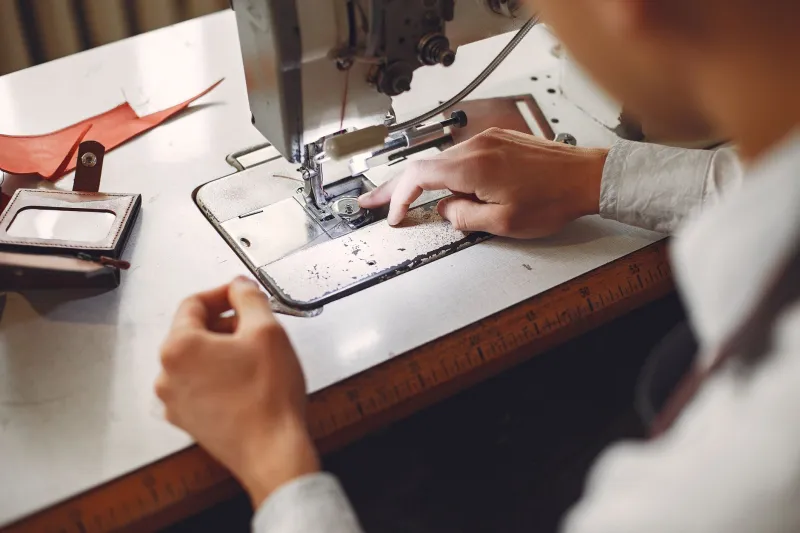
Photo: craftsperson engraving wooden keepsake box at workbench, close-up hands and tools, warm workshop light, via www.roadaffair.com
You order a personalised star map at half eleven on a Tuesday night, half-watching something on iPlayer, and by Wednesday morning it's sitting in a maker's inbox in a converted garage in Leicestershire. Then nothing happens. No dispatch note, no tracking, no movement. Just a slightly apologetic email asking you to confirm that yes, the name really is Niamh, and yes, the date really is the 4th of March and not the 3rd of April.
For a day or two it feels like friction. It isn't. Or at least, it isn't only that.
Across the UK, a small but noticeable number of personalised-gift makers have started building a deliberate pause into their workflow — a short, deliberate stop between 'order received' and 'machine switched on'. Nobody agrees on what to call it. Some say review window, some say confirmation check, one maker in Sheffield calls it, rather nicely, the second look.
What the pause actually looks like
It tends to take one of three shapes, and many makers now use two of them at once.
The hold. Your order appears as received but sits in a review state for something like 12 to 24 hours. Nothing is engraved, printed or stitched during that time. It exists mostly to catch the customer who emails four minutes after ordering to say they typed the wrong middle name — which, in November, is nearly everyone.
The reply-to-confirm email. The maker writes back with the exact text as it will appear on the piece, sometimes with a photo of a mock-up, sometimes just the words laid out in a plain email. You have to reply. Not click a box, not tick a form — reply, in words, so a human being has read it and said yes out loud.
The manual read-through. Less visible, but the most common of the three. The maker prints the order, reads the name aloud, counts the characters against the size of the blank, checks the apostrophe, checks the hyphen, checks whether the date is British or American format, and only then starts work.
None of this is glamorous. It's the least photogenic part of the job and it never appears on Instagram.
What actually gets caught in those few minutes
Ask a maker what the pause catches and the answers come fast, and they're almost all about spelling and dates.
The classic is the name with two legitimate spellings. Siân and Sian. Caitlin and Katelyn and Catelin. Isobel and Isabel. Megan and Meghan. On a silver necklace for a newborn, one letter is the whole point. The second classic is the double-barrelled surname where the customer has used a hyphen in one field and a space in another, and the maker has to decide whether to trust the order form or the note underneath it.
Then there's the date. Anyone who has ever ordered a wedding or memorial piece knows how easily 03/04 becomes the third of April in one person's head and the fourth of March in another's. Makers working in this corner of the trade have become quietly obsessive about writing dates out in full, for exactly this reason.
And then there are the smaller catches, the ones that feel almost funny afterwards. The customer who puts their own name in the gift message field. The order for a 20mm keepsake band requested with a fourteen-letter name. The note that reads same as last year but different baby — which is charming, and completely unusable without a follow-up question.
The pause is where the follow-up question happens. Without it, the follow-up question happens three weeks later, by email, from a customer holding a very nearly perfect gift.
Why it feels like a delay until it doesn't
Here's the honest bit. When you order something handmade, you're usually also a little bit anxious about whether it will arrive. Add a day of apparent silence and the anxiety goes up. Shoppers compare it, unfairly but understandably, to a high street retailer that emailed a dispatch note within six minutes.
But personalised work doesn't behave like stock. A plain wooden keepsake box goes back on the shelf. A box with someone's name on it does not. A mis-spelled engraving isn't a return — it's a blank, a re-cut, an apology and, often, a rush courier at the maker's own expense. For a memorial piece, there's no version of that which isn't deeply awkward for everybody.
Most makers will tell you the arithmetic is simple. One pause costs the customer half a day. One missed error costs the maker a day and the customer a delivery slot in mid-December, when delivery slots are the scarcest thing in the country.
How to use the pause properly
If you're buying a personalised gift this year, the pause is worth taking seriously rather than clicking past.
- Watch for it. If your confirmation says something like 'we'll email to confirm the spelling before we start', that's a step in the process, not marketing waffle. Keep an eye on the inbox you used.
- Reply in words. 'Yes, that's right — Siân with the circumflex, no second n' is infinitely more useful than a thumbs up. It also means the maker has something to check against.
- Send a photo if you're matching something. Existing necklace, old sign, family christening gown, whatever it is. Makers are very good at matching; they are not psychic.
- Ask for a proof on anything over about forty quid, or anything with a name you've never had to spell before. Most will offer anyway. Fewer people ask than you'd think.
- Don't sit on it. A reply you send on 15 December arrives at the same time as everyone else's and lands behind a queue.
One more, and this one matters: if you're buying on behalf of somebody else — a group gift, a workplace collection, a present for a cousin's new baby — pass the confirmation email to the person who actually knows the spelling. Group gifts are where middle names go to die.
Where the pause goes wrong
It's only fair to say that not every hold is a good hold. A pause with no explanation just looks like a slow maker, and a pause that turns into a five-email back-and-forth over a £12 keyring is its own kind of misery. The makers doing this well tend to do three things: they tell you up front how long the pause lasts, they say clearly what they're checking, and they pause once rather than five times.
Done properly, it takes about ten minutes of somebody's attention, spread across a day. Done properly, it's also the moment your order stops being a row in a spreadsheet and becomes a person reading a name carefully because someone, somewhere, is going to keep this thing for years.
That's not a delay. That's the job.