The Drawer of Nearlys: Where Personalised Gifts Go When They Almost Work

Photo: Alpin Stewart , CC BY-SA 2.0, via Wikimedia Commons
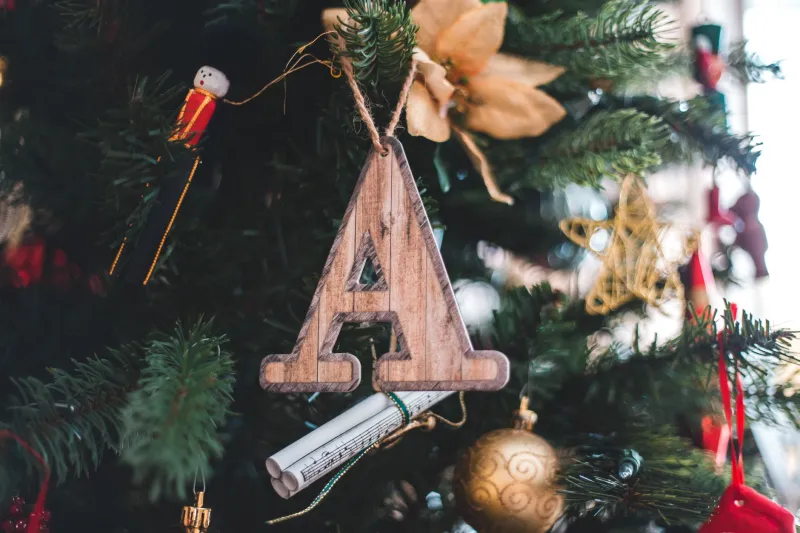
Personalised making has a tidy shopfront and a much messier back room. On the website, everything is centred, spelled correctly and photographed against a pale oak table. Behind the scenes, there is usually a drawer. Sometimes several. Inside are the nearlys: a test cut of a name that came out a little too deep, a monogram that leaned left, a spare letter A from a family set, a square of fabric with stitching that was almost perfect.
As we head into the 2026 gift-buying stretch, it feels like a good moment to look at what happens to all that material. Not in a preachy, zero-waste-perfect way — personalised gifts are made from real stuff, and real stuff has edges. But there are choices makers make, and choices shoppers make, that decide whether those edges end up in a useful second life or at the bottom of a bin bag.
First, the honest bit about offcuts
Not every leftover can be rescued. Engraving test cuts are often too small or too shallow to become anything else. Embroidery hoops leave stabiliser and thread ends. Vinyl cutters produce backing paper that has done its job and has no encore. A maker who tells you their studio produces absolutely no waste is either very clever, very lucky, or counting the bin bag differently.
What good makers tend to do is sort before they scrap. Wood offcuts go into one box. Fabric scraps into another. Spare letters and hardware go into little tubs, because the next order might need exactly that size. The interesting part is what happens after that sorting.
The nameplate that became a keyring
A common story in UK workshops is the error that is too good to throw away. One maker I spoke to describes an oak nameplate where the lettering was set slightly off-centre. It was not a disaster — the name was readable, the finish was smooth — but it was not right for the customer. Rather than bin it, the maker trimmed it down, drilled a small hole and turned it into a keyring for their own keys. Now it lives in a coat pocket, quietly advertising the fact that mistakes can still be useful.
That is not a business model on its own. You cannot build a workshop on keyrings made from failed nameplates. But it shows the mindset. Small wood offcuts become plant labels, coaster backs, hanging tags or test pieces for the next finish. Sawdust goes to compost, pet bedding or a local woodworker, depending on what has been used on the wood. The point is not that every scrap becomes a product. The point is that the scrap gets a second question before it gets a bin.
When a monogram refuses to behave
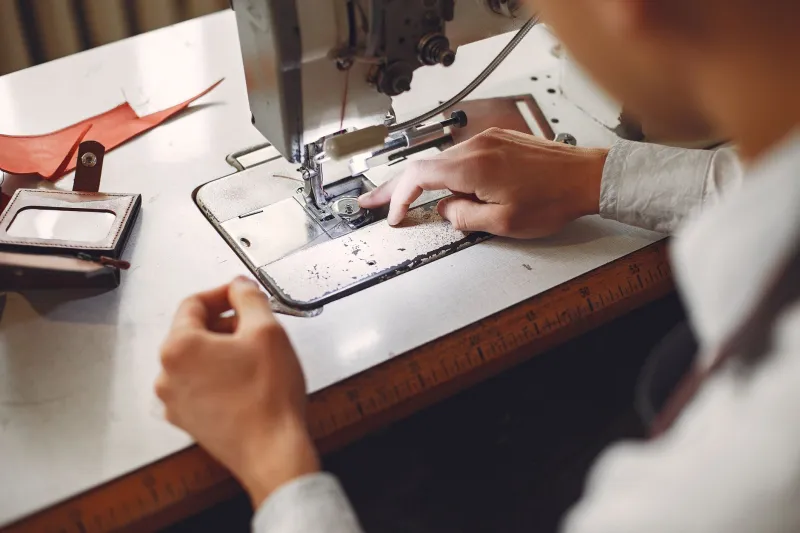
Embroidery is its own world of near-misses. A monogram can pucker. A baby blanket can have one stitch out of line. A name can be hooped slightly off-grain. These pieces often become samples, but some makers turn them into patchwork cushion panels, lavender bags, pocket warmers or simple drawstring pouches. The flawed section gets cut away, the usable fabric gets kept, and the final item is sold clearly as a seconds piece or kept for the maker's family.
Shoppers should know that this is not the same as buying a perfect personalised gift. Seconds have a story, sometimes a visible one. If you are the sort of person who likes the idea of a cushion made from a rescued monogram but would lie awake worrying about a slightly wobbly stitch, ask for a photo before you buy. Good makers will happily show you.
The drawer of nearlys
Most makers have one: a drawer, box or shelf of things that almost worked. Test cuts, rejected fonts, spare initials, hardware samples, the first attempt at a new product that was fine but not right. Some of it becomes teaching material. Some becomes reference when a customer asks, “Could you do this in a smaller size?” Some is simply there because throwing away a perfectly good piece of oak feels wrong.
That drawer is not waste exactly. It is a working archive. But it can also become a quiet hoard if nobody ever decides what to do with it. The makers who handle it best tend to have a rule: if it has not been used or sold within a certain period, it gets donated, repurposed or recycled. A few run occasional “seconds” sales, often announced quietly on social media or at a village hall stall. Those sales are worth watching if you like a bargain and do not need everything to be pristine.
What shoppers can do with this information
You do not need to interrogate a maker about their bin before buying a birthday gift. But a few small choices can help.
Ask about seconds if the gift is for you or for someone who values the story more than flawless symmetry. Choose simpler personalisation where it works — a first name rather than a full name and date, a standard-sized coaster rather than an awkward bespoke shape. Order early, because rushed remakes are one of the biggest sources of nearlys. If you are buying a set, ask whether spare letters or replacement parts are available, so a lost piece does not turn the whole gift into a write-off later.
And if a maker mentions offcuts, seconds or repair in their shop information, take that as a good sign. It usually means they have thought about the whole life of the thing, not just the photograph.
A smaller bin bag, not a perfect one
There is no such thing as a completely waste-free personalised gift. Wood has to be cut, fabric has to be trimmed, thread has to be changed. But there is a difference between a studio that scraps without thinking and one that keeps a drawer of nearlys and knows why. As shoppers, we can support the second kind — not by demanding perfection, but by being curious, patient and willing to love a gift that came with a few useful leftovers.